THE MUST-DOs FOR YOU TO KEEP MOVING
God calls us not only to start but to finish. Keep moving by maintaining character, clear vision, conviction, connection, love for Christ, closeness to God, generosity, and spiritual fire. Rise, refocus, and fulfil your God-given assignment.
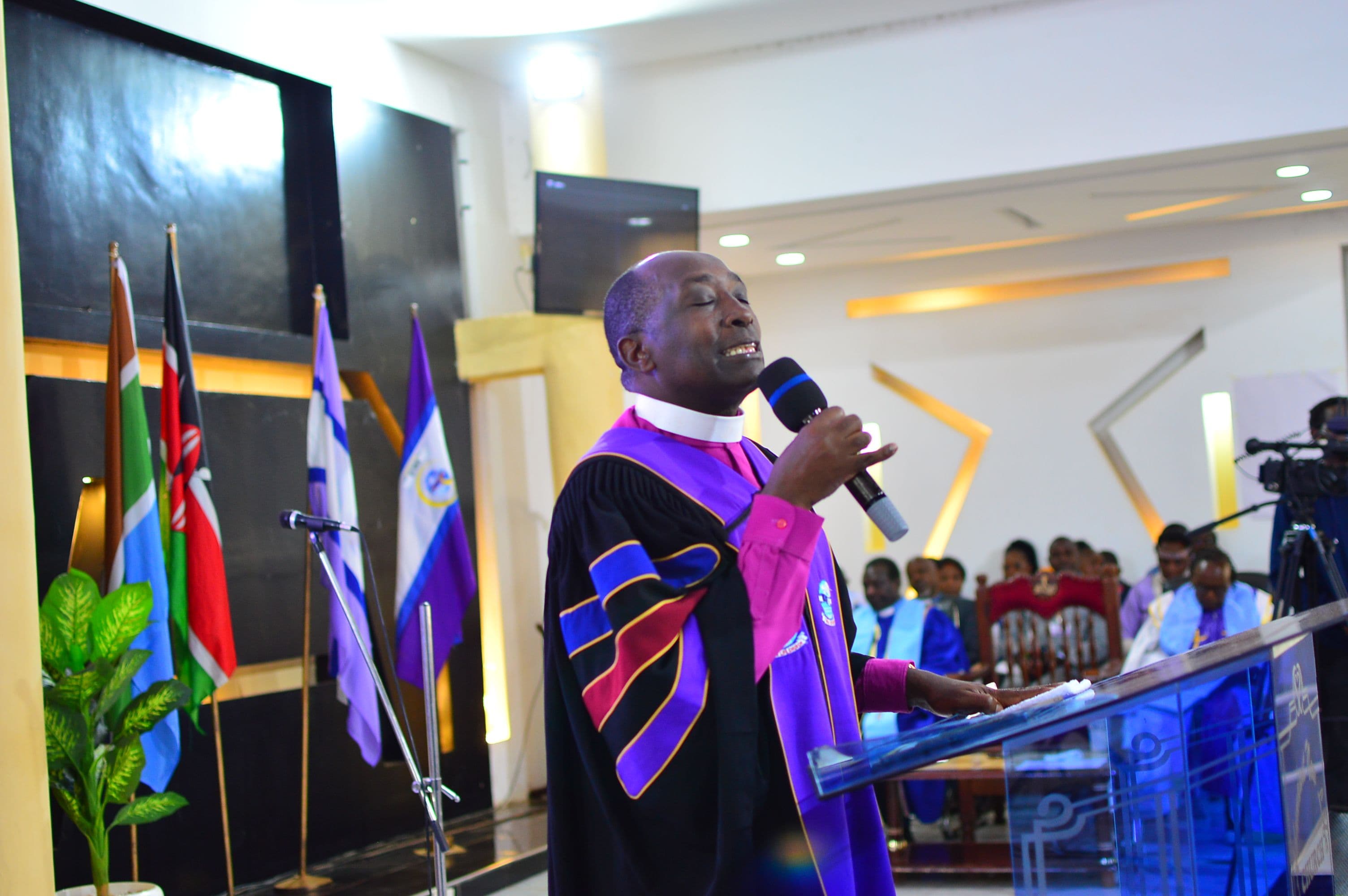
Bishop Dr. Paul G. Wanjohi
Senior Pastor

Sermon Recording
“Colossians 4:7, 17”
SERMON TITLE: THE MUST-DOs FOR YOU TO KEEP MOVING
Main Scripture: Colossians 4:7, 17
“And say to Archippus, Take heed to the ministry which thou hast received in the Lord, that thou fulfil it.” — Colossians 4:17 (KJV)
God does not only call us to start; He calls us to finish. Many people begin with passion, excitement, and great expectations, but somewhere along the journey they lose momentum.
Paul’s instruction to Archippus was clear: “Take heed to the ministry…that thou fulfil it.”
There are things that every believer, minister, leader, businessman, professional, parent, and person pursuing a God-given assignment must deliberately maintain in order to keep moving.
1. MAINTAIN YOUR CHARACTER
Scriptures
Ephesians 6:21: “But that ye also may know my affairs, and how I do, Tychicus, a beloved brother and faithful minister in the Lord, shall make known to you all things.”
Proverbs 10:9: “He that walketh uprightly walketh surely: but he that perverteth his ways shall be known.”
Daniel 6:4: “Then the presidents and princes sought to find occasion against Daniel concerning the kingdom; but they could find none occasion nor fault…”
Character is a currency. There are places where money cannot take you, but character will. There are doors that talent may open, but only character can keep you there.
Character is not merely what you do when people are watching you. True character is what you do when nobody is watching. Your public life and your private life should agree.
You cannot preach holiness publicly and practise dishonesty privately. You cannot demand faithfulness from others while living an unfaithful life yourself. Your gift may attract people, but your character determines whether they can trust you.
Joseph demonstrated character in Genesis 39:7–12. Potiphar’s wife tried to seduce him when nobody else was present. Joseph had an opportunity to sin secretly, but he refused.
He said, “How then can I do this great wickedness, and sin against God?” — Genesis 39:9. Joseph understood that even when Potiphar was not watching, God was watching. His character eventually carried him from the prison to the palace.
Think of a church treasurer who has access to church money. Nobody may check every transaction. Character is demonstrated when that person refuses to misuse even one shilling because he or she knows that the money belongs to God’s work.
Likewise, a businessman demonstrates character when he gives a customer the correct change even when the customer would never have noticed the mistake.
Key Truth: Your gift may take you up, but your character determines how long you stay there.
2. MAINTAIN A CLEAR VISION
Scriptures
Habakkuk 2:2: “Write the vision, and make it plain upon tables, that he may run that readeth it.”
Proverbs 29:18: “Where there is no vision, the people perish…”
Philippians 3:13–14: “…forgetting those things which are behind, and reaching forth unto those things which are before, I press toward the mark…”
Your vision should always be at your fingertips. You should be able to explain where you are going.
What has God called me to do?
What kind of person am I becoming?
What am I building?
What must I accomplish?
What direction is my ministry, family, business, or career taking?
A person without vision is easily distracted. Every opportunity is not your opportunity. Every invitation is not your assignment. Every open door is not necessarily your door. Vision helps you determine what to say yes to and what to say no to.
Nehemiah had a clear vision: to rebuild the walls of Jerusalem. When Sanballat and Geshem tried to distract him, Nehemiah answered, “I am doing a great work, so that I cannot come down.” — Nehemiah 6:3. Because his vision was clear, distractions could not pull him away.
Consider someone who has a vision to build a successful Christian media ministry. If the vision is clear, decisions about programming, staffing, finances, partnerships, equipment, and expansion will be measured against that vision. Without clear vision, an organisation may spend money and energy on activities that look good but do not move it toward its purpose.
Key Truth: When vision is clear, distractions become easier to identify.
3. MAINTAIN YOUR CONVICTION
Scriptures
Daniel 3:16–18: Shadrach, Meshach, and Abednego declared that God was able to deliver them, but even if He did not, “…we will not serve thy gods, nor worship the golden image which thou hast set up.”
2 Timothy 1:12: “…for I know whom I have believed, and am persuaded that he is able to keep that which I have committed unto him…”
Romans 14:5: “…Let every man be fully persuaded in his own mind.”
Conviction is knowing what you believe and why you believe it. Conviction is what keeps you standing when everybody else is sitting. Conviction keeps you faithful when compromise appears easier.
There will be moments when following God becomes unpopular. There will be pressure to compromise your values. There will be moments when obedience seems costly. At such times, you need more than excitement—you need conviction.
Shadrach, Meshach, and Abednego were told: Bow or burn. Their conviction was stronger than their fear of the furnace. They did not say, “If everybody else bows, perhaps we should also bow.” They stood. And because they stood for God, God stood with them in the fire.
A Christian employee may be instructed to falsify figures, manipulate accounts, or participate in corruption. The easiest option may be to cooperate. But conviction says, “Even if refusing costs me promotion, I will not violate what I believe.”
Key Truth: Conviction determines what you will refuse to compromise even when there is a price to pay.
4. MAINTAIN A SERIOUS CONNECTION BETWEEN THE HEAD AND THE OTHER PARTS OF THE BODY
Scriptures
Colossians 2:19: “And not holding the Head, from which all the body by joints and bands having nourishment ministered, and knit together, increaseth with the increase of God.”
1 Corinthians 12:20–21: “But now are they many members, yet but one body. And the eye cannot say unto the hand, I have no need of thee…”
Christ is the Head, and believers are members of His Body. A hand disconnected from the body cannot function for long. An eye cannot operate independently of the rest of the body. Likewise, Christians were never designed to live in spiritual isolation.
We need fellowship, spiritual leadership, accountability, correction, encouragement, partnership, prayer, and unity.
Acts 2:42 says, “And they continued stedfastly in the apostles’ doctrine and fellowship, and in breaking of bread, and in prayers.” The early believers remained connected. Their strength was not merely individual—it was corporate. They prayed together, worshipped together, learnt together, helped one another, and the church grew.
Consider a minister going through discouragement. If he isolates himself, stops fellowshipping with other ministers, stops receiving counsel, and refuses accountability, discouragement can grow into defeat. Another minister facing the same challenge may call trusted spiritual leaders, pray with fellow ministers, receive counsel, and regain strength.
Key Truth: Isolation makes you vulnerable; godly connection strengthens you.
5. MAINTAIN A SERIOUS LOVE FOR CHRIST
Scriptures
John 21:15: “Simon, son of Jonas, lovest thou me more than these?”
Matthew 22:37: “Thou shalt love the Lord thy God with all thy heart, and with all thy soul, and with all thy mind.”
Revelation 2:4: “Nevertheless I have somewhat against thee, because thou hast left thy first love.”
Never become so busy working for Jesus that you stop spending time with Jesus. Ministry can become dangerous when activity replaces intimacy.
You can preach sermons, lead worship, organise programmes, attend conferences, counsel people, raise money, and build churches, yet gradually lose your personal love for Christ.
Before Jesus recommissioned Peter, He did not ask, “Peter, are you talented?” He asked, “Lovest thou me?”
In Luke 10:38–42, Martha was busy serving, while Mary sat at Jesus’ feet. Jesus did not condemn service, but He showed that relationship must come before activity.
A pastor may spend every day visiting members, attending meetings, answering calls, preparing programmes, and solving church problems. But if the pastor no longer has personal prayer, Bible reading, worship, and quiet time with God, ministry can slowly become professional rather than spiritual.
Key Truth: Never allow the work of God to replace your relationship with the God of the work.
6. MAINTAIN PROXIMITY—BOTH HORIZONTAL AND VERTICAL—WITH HE THAT CALLED YOU
Scriptures
John 15:4–5: “Abide in me, and I in you…for without me ye can do nothing.”
James 4:8: “Draw nigh to God, and he will draw nigh to you.”
Hebrews 10:24–25: “And let us consider one another to provoke unto love and to good works: Not forsaking the assembling of ourselves together…”
Proverbs 27:17: “Iron sharpeneth iron; so a man sharpeneth the countenance of his friend.”
Vertical proximity means maintaining closeness with God through prayer, worship, Scripture, obedience, fasting, and listening to the Holy Spirit.
Horizontal proximity means staying connected to the people God has placed around you. You need people above you who can mentor you, beside you who can walk with you, and below you whom you can raise and mentor.
In Exodus 17:11–12, Moses became tired while Israel fought Amalek. Aaron and Hur stood beside him and held up his hands. Victory was taking place in the valley, but it depended partly on relationships on the mountain. Even Moses, the great servant of God, needed other people.
A leader who refuses advice because he believes, “God speaks only to me,” can easily make avoidable mistakes. Wise leaders remain close to God while surrounding themselves with trustworthy people who can counsel, correct, encourage, and pray with them.
Key Truth: Remain connected upward to God and outward to the people God has placed around your assignment.
7. MAINTAIN A GIVING COVENANT
Scriptures
Numbers 18:25–26: “And the LORD spake unto Moses, saying, Thus speak unto the Levites…when ye take of the children of Israel the tithes…then ye shall offer up an heave offering of it for the LORD…”
Malachi 3:10: “Bring ye all the tithes into the storehouse…”
2 Corinthians 9:6–7: “He which soweth sparingly shall reap also sparingly; and he which soweth bountifully shall reap also bountifully…God loveth a cheerful giver.”
Giving should not be something you practise only when you have plenty. Giving should become part of your covenant walk with God.
Do not allow promotion to make you forget generosity. Do not allow financial difficulty to completely destroy your discipline of giving. Our giving demonstrates gratitude, faith, obedience, worship, stewardship, and recognition that God is our source.
In 1 Kings 17:8–16, the widow of Zarephath had only a handful of flour and a little oil. Yet she obeyed the prophetic instruction. The result was supernatural provision. Her flour did not run out, and her oil did not fail.
In Mark 12:41–44, Jesus also honoured a poor widow who gave two mites because she gave sacrificially from what she had. God does not only look at the size of what you give—He looks at the heart behind the giving.
Someone may begin giving faithfully when earning KSh 20,000 per month. Years later, God increases the person’s income greatly. The temptation may be to reduce commitment because the actual amount being given now appears large. But covenant says, “The God who blessed me when I had little remains my God when I have much.”
Key Truth: Never become too blessed to abandon the principles you practised while trusting God for the blessing.
8. REMAIN TO BE A CHARCOAL AND NOT A LOG
Scriptures
Hebrews 10:24–25: “And let us consider one another to provoke unto love and to good works: Not forsaking the assembling of ourselves together…”
Ecclesiastes 4:9–10: “Two are better than one…For if they fall, the one will lift up his fellow…”
2 Timothy 1:6: “Wherefore I put thee in remembrance that thou stir up the gift of God…”
A large log may look impressive, but charcoal teaches us an important spiritual principle. One piece of charcoal removed from the fire gradually becomes cold. Put it back among burning coals, and shortly it begins glowing again.
There are believers who become spiritually cold because they disconnect themselves from environments that maintain their fire. Remain around people who pray, believe God, challenge you, encourage holiness, carry vision, love God’s Word, and push you toward your calling.
After the great victory on Mount Carmel, Elijah became discouraged and isolated himself. In 1 Kings 19, he went alone into the wilderness and even asked God to take his life. God restored Elijah and later reminded him that he was not alone—there were still thousands who had not bowed to Baal. Isolation had distorted Elijah’s perspective.
After Jesus ascended, the disciples did not permanently scatter into isolation. Acts 1:14 says, “These all continued with one accord in prayer and supplication…” They remained together until the Holy Spirit came upon them on the Day of Pentecost.
Think of two Christians facing discouragement. One stops attending fellowship, stops receiving calls, stops praying with others, and spends months alone. His spiritual fire gradually weakens. Another person facing similar difficulties remains connected to prayer meetings, trusted believers, church fellowship, and spiritual leadership. Through the encouragement of others, that person’s fire is rekindled.
Key Truth: Do not become a lonely log. Remain among burning charcoal. Stay connected to the fire.
CONCLUSION
If you are going to fulfil what God has called you to do:
Maintain your character. Joseph teaches us that integrity matters even when nobody is watching.
Maintain a clear vision. Nehemiah teaches us not to come down from our assignment because of distractions.
Maintain your conviction. Shadrach, Meshach, and Abednego teach us that some things must never be compromised.
Maintain connection with the Head and the Body. The early church teaches us that spiritual growth happens through connection.
Maintain a serious love for Christ. Peter reminds us that ministry must flow from love for Jesus.
Maintain vertical and horizontal proximity. Moses, Aaron, and Hur teach us that we need God and we also need one another.
Maintain a giving covenant. The widow of Zarephath reminds us that obedience and generosity must remain part of our walk with God.
Remain a charcoal and not a log. The disciples teach us to stay connected to people and environments that keep our spiritual fire burning.
FINAL CHARGE
Paul told Archippus:
“Take heed to the ministry which thou hast received in the Lord, that thou fulfil it.” — Colossians 4:17
There is a difference between receiving a ministry and fulfilling a ministry.
There is a difference between starting a journey and finishing the journey.
There is a difference between receiving a vision and bringing the vision to completion.
Guard your character.
Keep your vision clear.
Protect your convictions.
Stay connected.
Keep loving Jesus.
Stay close to God and to the right people.
Remain a giver.
Stay in the fire.
KEEP MOVING!
Do not stop because the journey is difficult.
Do not stop because somebody disappointed you.
Do not stop because people misunderstood you.
Do not stop because the results have delayed.
Do not stop because you made a mistake.
Rise again.
Reconnect.
Refocus.
Rekindle the fire.
And keep moving until you fulfil everything that the Lord has entrusted to you.
“Take heed to the ministry which thou hast received in the Lord, that thou fulfil it.” — Colossians 4:17
Scripture References1
Colossians 4:7, 17
““And say to Archippus, Take heed to the ministry which thou hast received in the Lord, that thou fulfil it.” ”